
Gen Z Mindset: Growing up in Two Realities
Gen Z grew up straddling a real and a digital reality and why understanding this dual world is key to guiding and supporting them
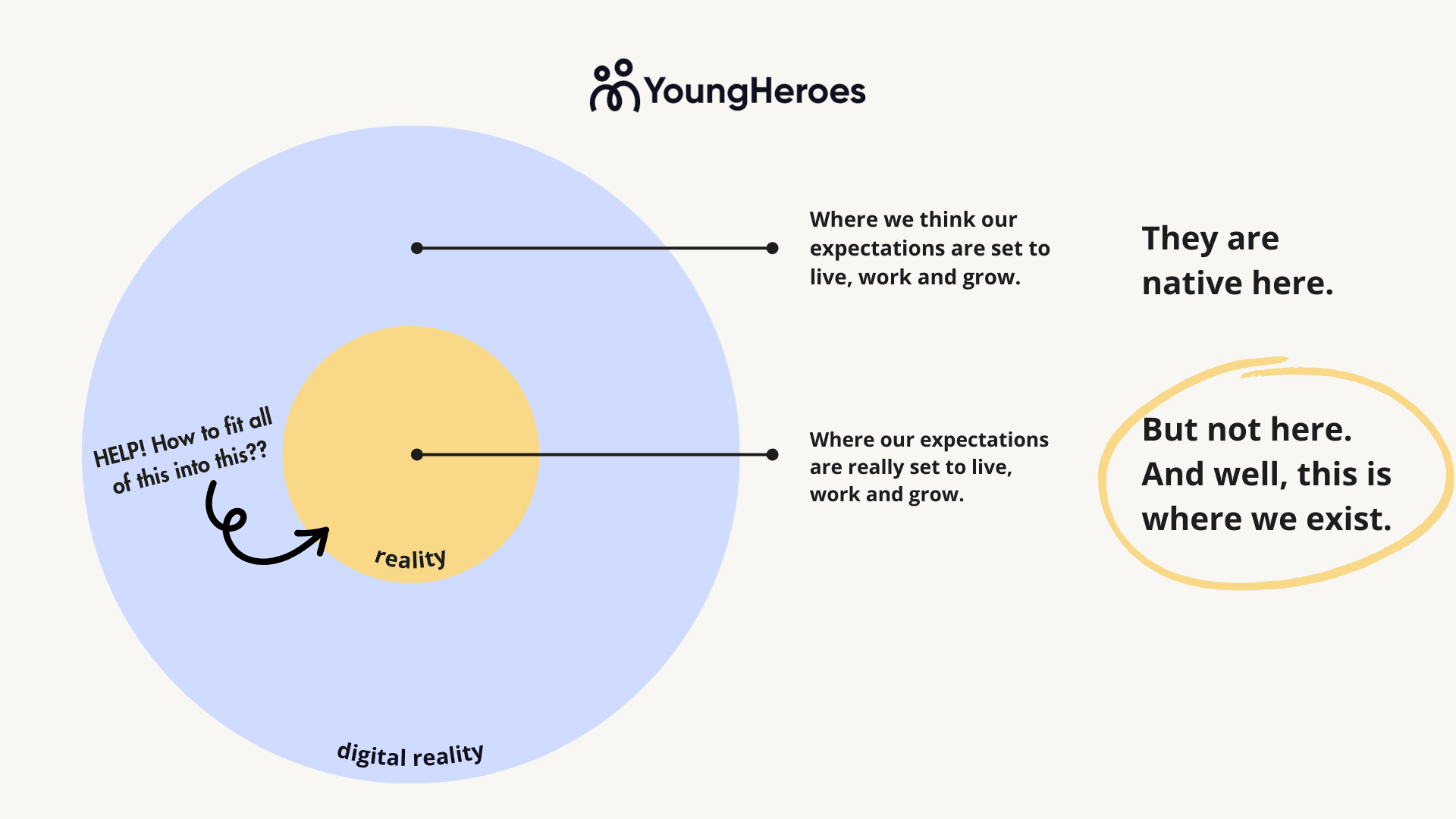
In How Many Realities Do We Live?
That sounds like an odd question, doesn't it? But if we are observant, we argue that most people these days live (and some grew up) in two realities: The real one and the digital one.
Not convinced? Let's back up to the beginning.
When We Grew Up
What is your favourite childhood memory? And how does it take place? Mine is easy: It is at summer camp, sitting at the bonfire and watching the stars above me. That was my reality at that moment. Everything around me, the crackling of the fire, the stars above me, the hushed conversation of the other ones around me.
What's interesting is that for most of my childhood and adolescence, technology did not play a big role. I might have played a computer game occasionally, let my creative juices flow in Microsoft Paint, or listened to music on my Discman, but technology was essentially a support for the things I wanted to do, like play games, be creative, or listen to music.
But the essence of technology has changed: Technology evolved to an architect and has built a second, digital reality for us.
The Rise of the Digital Reality
The first big push of the digital reality, when we started using it beyond a tool, was the introduction of social media. A mass phenomenon with billions of users. Of course, back then, the main purpose of social media was "to connect with people, to build a network". And boy has it done just that: It has been empowering to see movements grow, people in need come together and change being made by the connections that have been formed on these platforms.
The Other Side of the Digital Reality
But if we look back to why Mark Zuckerberg built "The Facebook", it was to date or to "get whatever I can". So, from early on, social media incentivised behaviours that would instil romantic (or other) feelings on the other side of our network connection.
And how do we as humans do that? We produce an image of us that fits that bill. We show off our strong, beautiful, successful versions. In the digital reality, we share the amazing, good-looking moments of our lives, and completely disregard the hard and not-so-glamorous parts of our life in our lived reality. The moments that make us human.
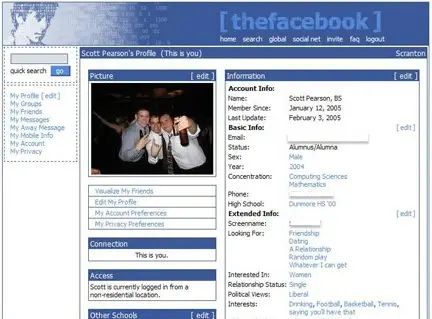
Old "The Facebook" profile screenshot. Yikes.
The Size of the Digital Reality
Furthermore, the digital reality gives us access to everything on the internet, well beyond social media, from collaborating on Fortnite with an international team, to watching the baby panda live stream from Wolong Grove, to the drop shipper who makes 15k a month living on Bali, selling stuff from China.
Everything is possible everywhere. Everyone is successful everywhere. This creates a skewed perception of reality, setting expectations that we can never live up to in our real life, leaving us frustrated, overwhelmed and feeling worthless.
Ruling the Digital Reality
And now to the scary part. Who actually rules this digital reality and how is it governed? The quick answer is money and algorithms. And this is where the intricacies of digital reality begin to show their really dark sides. These algorithms, built by a select few tech companies, are designed to activate our dopamine reward pathways, the same system that underpins addictive behaviour, and to amplify the most extreme voices. They decide what we see, what we consume, and ultimately, what we believe to be true or important. All driven by the underlying goal of maximising profit.
How to Grow Up with Two Realities?
Now, imagine you are growing up, not alongside but inside it. Many Gen Zers had their first phone between the ages of 7 and 10. In comparison, many Millennials had their first smartphones at around 16 or older, and the youngest Gen Xers were already 28 when the first iPhone hit the market. For most of us, we were able to spend the very formative first years of our life and our careers within the real world, focused on what is right in front of us.
It definitely wasn't always easy, but it does sound more manageable than a digital reality, no?
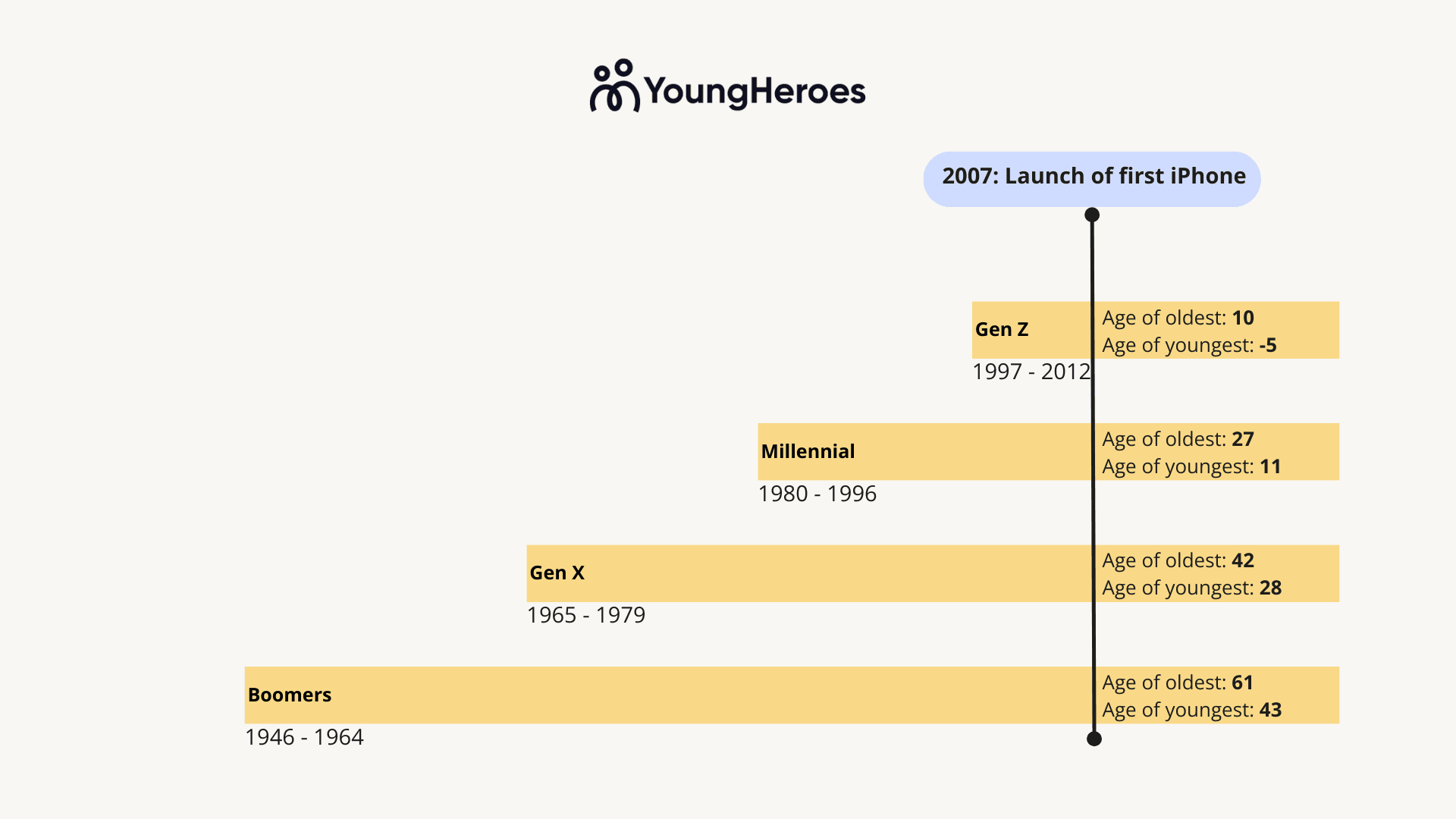
How old were you when the first iPhone came out?
All children who follow Gen Z will not have the luxury of only being present where they are physically. Since an early age, the lines between the digital self and the real self will be increasingly blurred. That sets skewed expectations for what an authentic life can look like for them: Millionaire by 30? Manager position within six months? Hitting milestones without failures? Yes, please!
But it does not work like that in reality. It takes time to grow. It takes hard conversations to get your point across. It takes courage to get back up once we fall. And it takes experience to navigate the waters.
Respect the Digital Reality!
For Gen Z, the digital reality isn't a game or a distraction; it is part of the world they live in. It exists in the palm of their hands, on the screens of their devices, and in the fabric of their everyday lives. It shapes their expectations, their identities, their fears, and their hopes.
And that reality is not to be dismissed. It is to be understood. It is to be respectfully addressed. It is to be meaningfully coached.
Ready to bridge the gap between digital and real?
Help your Gen Z professionals navigate both realities with confidence