
A Cheeky Manager's Guide to Speaking & Collaborating with Gen Z
(without being cringe or condescending)
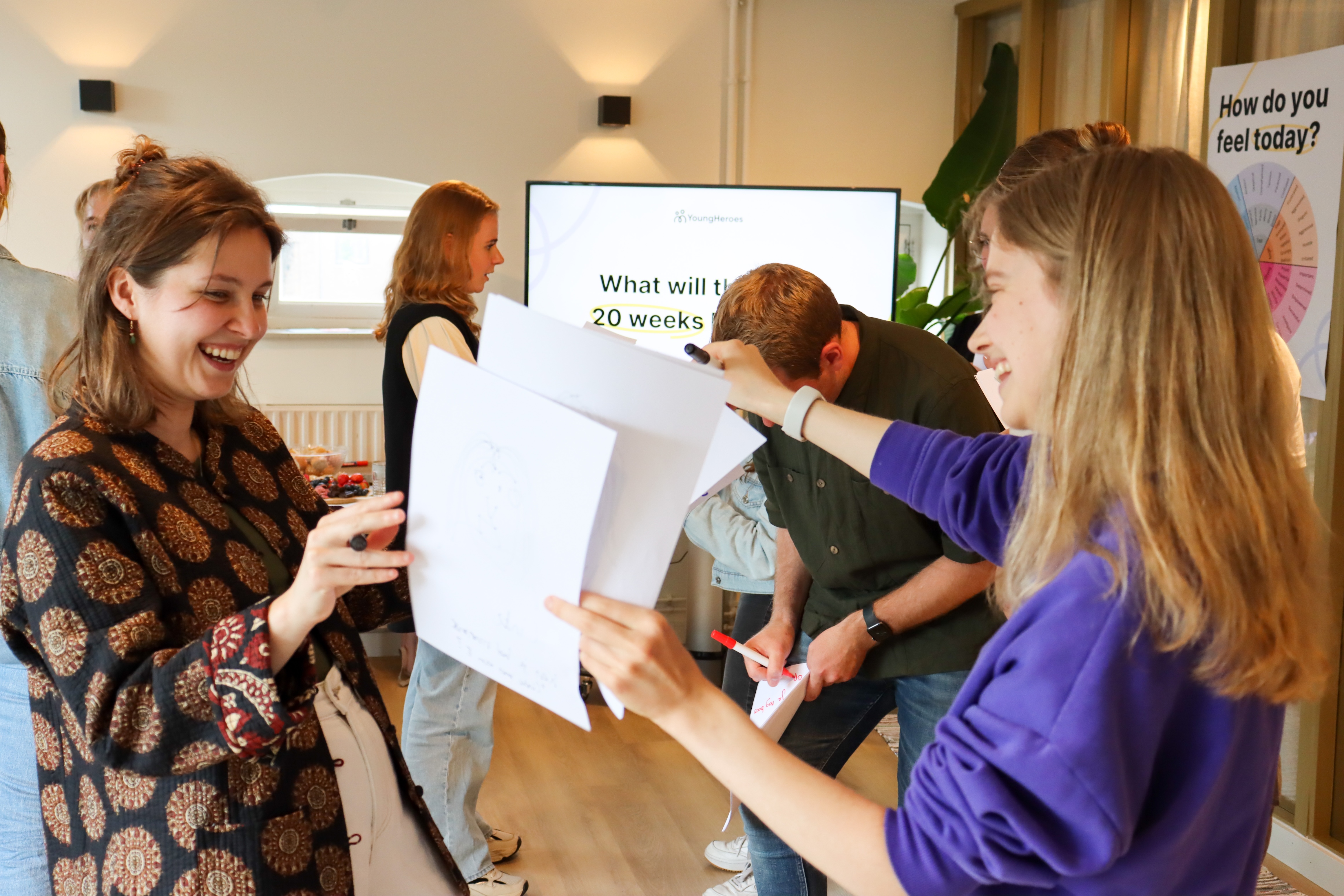
You don't have to be a TikTok polyglot to work brilliantly with Gen Z. You do need clarity, curiosity, and a few sharp habits that make collaboration easy across ages and backgrounds.
The question
How can organisations collaborate with Gen Z professionals to maintain productivity and innovation?
The answer
- •Identify the skills and strengths of the individual
- •Recognise how they can contribute
- •Understand how to engage with them
So, here we have a handful of actionable steps that you can take to speak and collaborate with Gen Z.
1) Identify the Skills & Strengths
How: The "Strength Scan"
Why it matters: People (regardless of generations) do their best work when they know what they're great at and when you see it too. With this deep understanding of your colleagues, it becomes easier to delegate the right tasks, trust in their capabilities and have more honest and vulnerable conversations.
Run this once per person and refresh quarterly:
- •T-Shape Strength: Ask them, "What's your super strength? What other things do you enjoy doing in your role right now?" Draw it together on a one-pager, like a T.
- •Brag Bank: "Name 3 recent moments you were proud of. What made them work?" Keep these receipts for reviews.
- •Energy Map: "What work gives you energy? What drains it?" Aim to grow the energisers 10–20% over the next cycle.
- •Growth Bet: Ask for one skill they want to level up in this quarter. And one simple way we'll measure it.
Cheeky tip If someone is unsure about their strengths, ask, "What do teammates DM you about when they're stuck?" That's the hidden superpower.
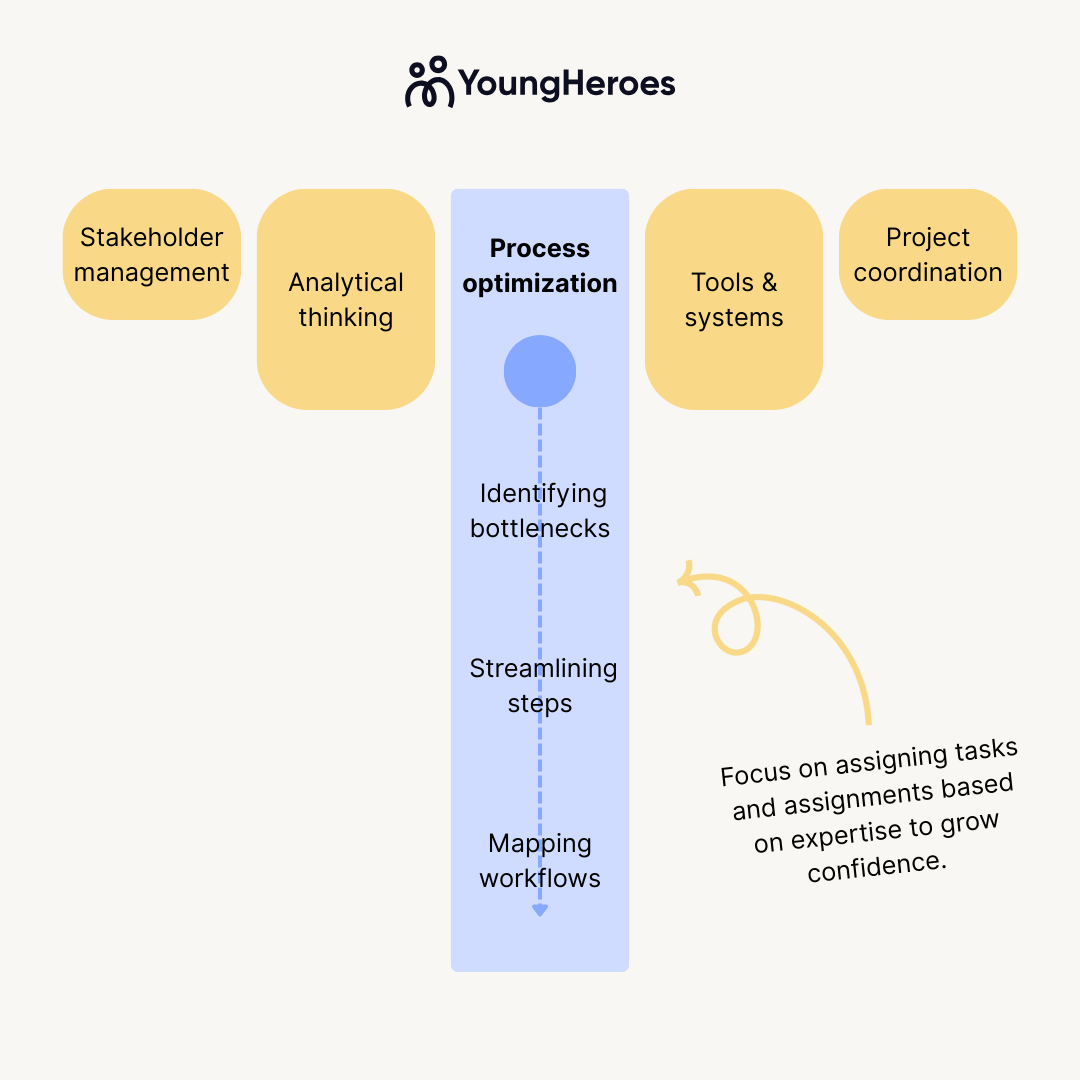
T-Shape for a Junior Operations Manager.
2) Recognise How They Can Contribute
How: Make It Visible & Specific
Why it matters: Strengths only change outcomes when they map to real work. Especially early-careers and young professionals struggle with seeing the bigger picture of their work. They are focused on day-to-day operations due to the executive nature of junior positions, but it is still motivating to know where the ship is going when you help set the sails: Micro-ownership beats vague participation, every time.
Use a simple Contribution Map:
- •Outcome: What we're trying to achieve (1–2 sentences).
- •Role Card: "You own X. Success looks like Y by date Z."
- •Interfaces: Who you'll collaborate with; how you'll hand work off (doc, PR, Figma, demo).
- •Stretch Edge: One new responsibility that grows the person just enough.
- •Proof: What artefact proves it's done? (link, screenshot, metric)
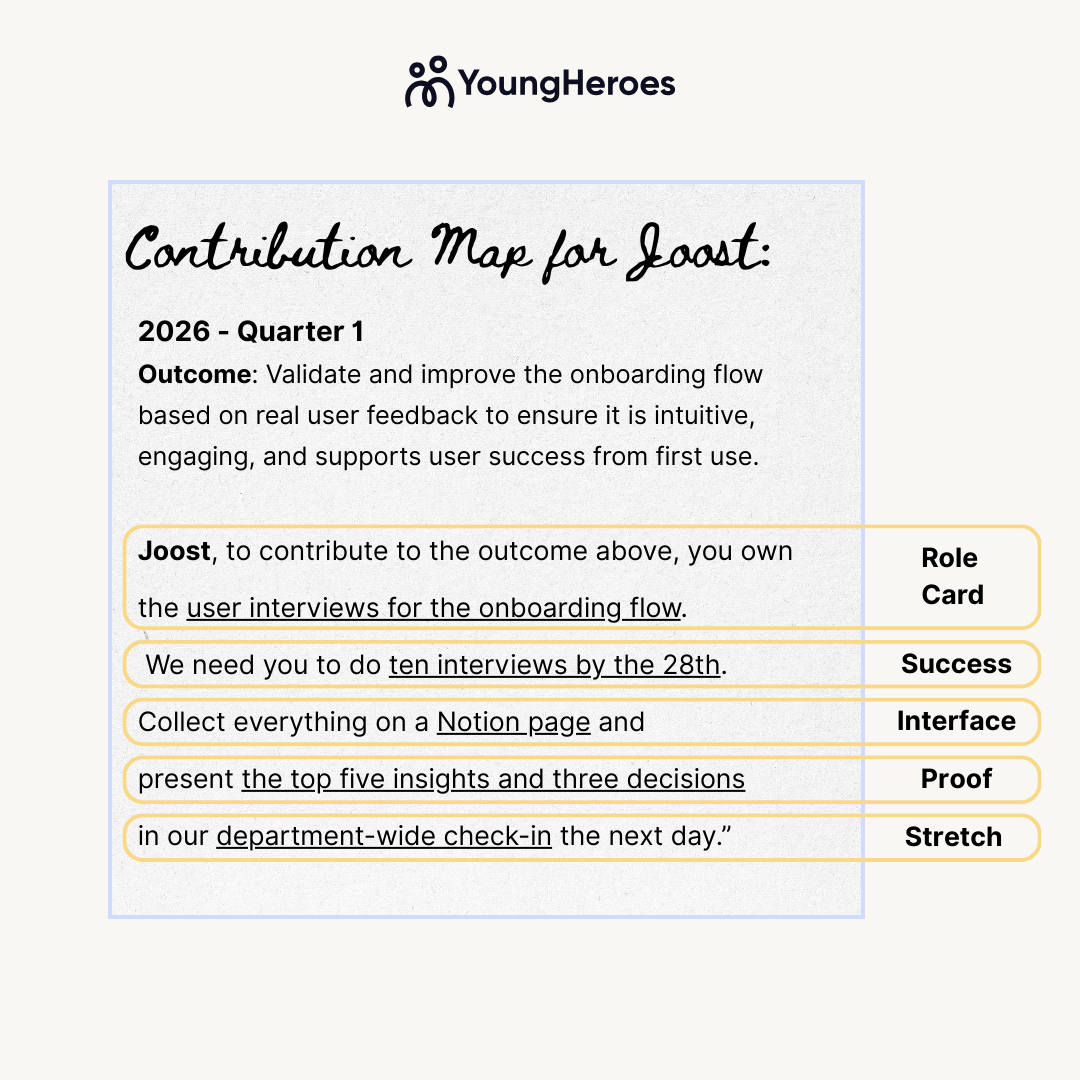
Example Contribution Map
Cheeky pitfall Telling someone they're "empowered" without giving them a clear decision to own. That's not empowerment; that's abandonment with glitter.
3) Understand how to engage
How: Your Comms & Collab Contract
Why it matters: Collaboration breaks not on intent, but on friction: unclear asks, slow feedback, fuzzy priorities. Discuss what the team culture around communication is and ensure that everyone understands and pays into this "Comms & Collab Contract".
Set a "Collab Contract" with your team:
- •Channels: "Urgent = call. Same-day = chat. Deep work = doc comments."
- •Response time: "I'll answer within 2 hours during core hours."
- •Decision hygiene: We write a Decision Log (title, context, choice, owner, date).
- •Feedback style: We use SBI (Situation–Behavior–Impact) + one next step.
Cheeky tip Gen Z isn't allergic to hierarchy; they're allergic to mystery. Say the quiet part out loud: how decisions happen, who signs off, what "done" really is.
Manager's Field Guide: Translations
Here is also a cheeky field guide that includes important translations. Just like a great lasagne, there are layers.
- •"I want impact." → "Give me context, ownership, and a clear outcome."
- •"I value balance." → "I can sprint, but I also need sustainable time to rest."
- •"I care about purpose." → "Connect my task to the customer or mission in 60 seconds."
- •"I prefer texting." → "Write it down. I'll move faster with a doc than a meeting."
- •"I want growth." → "Give me stretch work with coaching on the side—not just extra tasks."
- •"I need feedback." → "Tell me sooner, not later, so I can adapt my work."
- •"I feel unseen." → "Acknowledge my work, and connect my contribution to team progress."
- •"I'm overwhelmed." → "Help me prioritise. Say what to drop or delay, not just what to add."
- •"I want flexibility." → "Trust me on the when/where if I deliver on the what/why."
Final Words
Working with Gen Z (or any generation, really) isn't about cracking some secret code. It's about noticing the signals, translating them into needs, and building the conditions where everyone can contribute and grow. Collaboration thrives when clarity, trust, and a little humour are present.
And don't forget yourself in the process. Be kind to yourself. Managing across generations is complex work, and perfection isn't the goal.
Progress is.
Ready to build stronger collaboration with Gen Z?
Schedule a demo to see how we can help